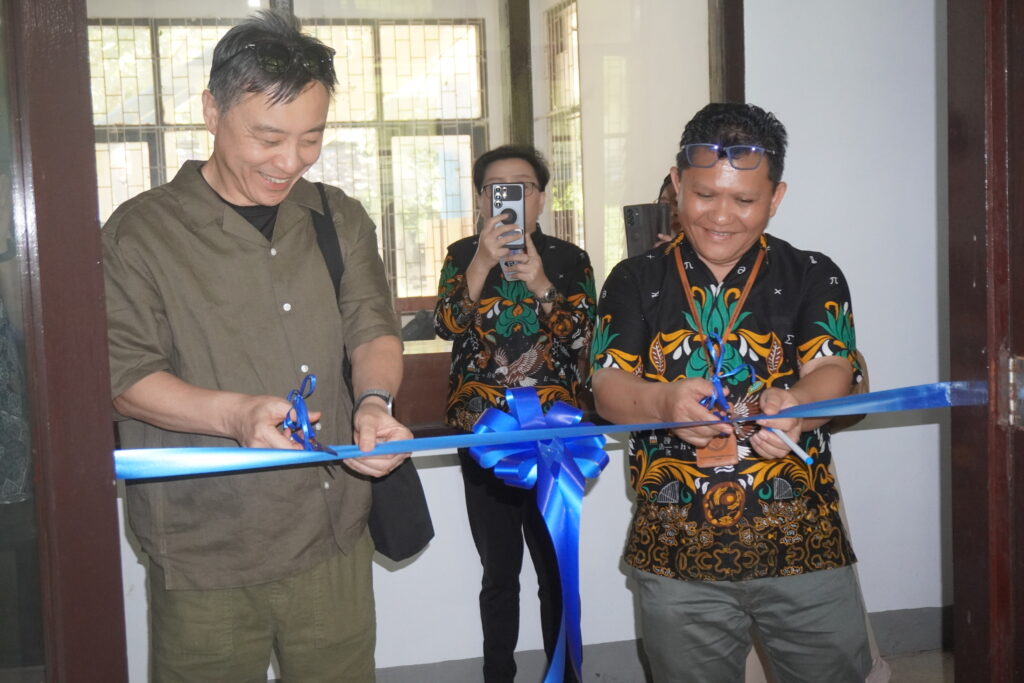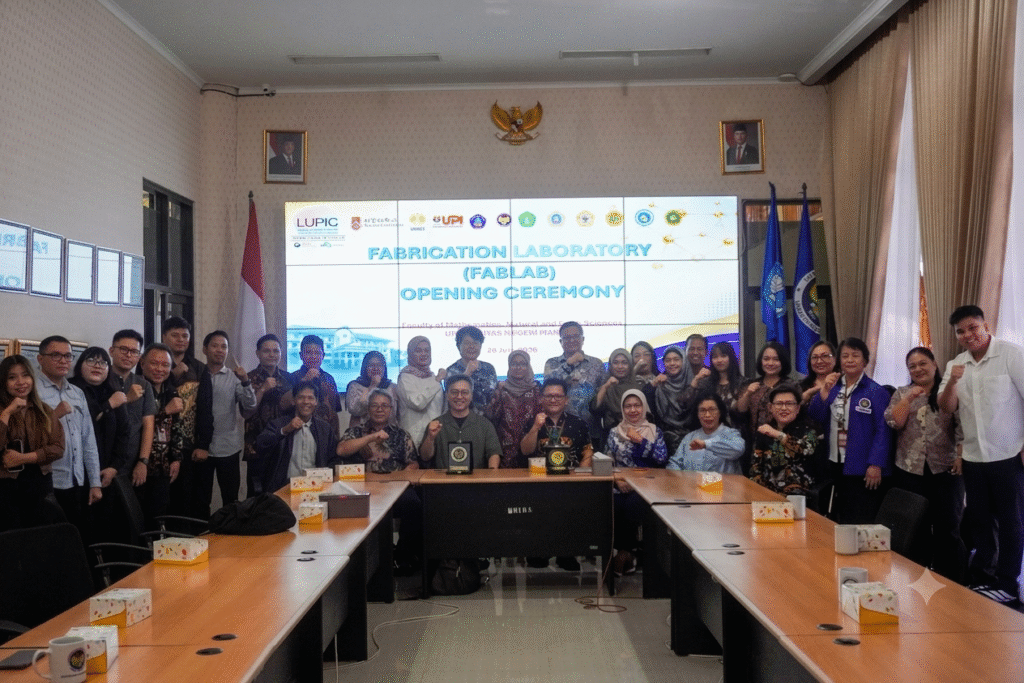
Tondano, 28 July 2026 — Universitas Negeri Manado (UNIMA) officially inaugurated the Fablab of the Department of Chemistry, marking a significant milestone in strengthening innovation, digital fabrication, and technology‑enhanced learning within the university. The opening ceremony was held on 28 July 2026 as part of a three‑day international academic program sponsored by the Leading University Project for International Cooperation (LUPIC).
The ceremony was led by Prof. Dr. Yermia Mokosuli, M.Si, Acting Rector of UNIMA and Dean of FMIPAK. In his address, Prof. Mokosuli emphasized that the establishment of the Fablab represents UNIMA’s strategic commitment to advancing modern scientific education and fostering a creative ecosystem for students and lecturers in the field of chemistry.
The inauguration was attended by Prof. Won Koo Lee, LUPIC Coordinator from Sogang University, South Korea, along with delegates from LUPIC partner universities across Indonesia, including Universitas Negeri Semarang, Universitas Pendidikan Indonesia, Universitas Pendidikan Ganesha, Universitas Maritim Raja Ali, Universitas Negeri Lampung, Universitas Mataram, and Universitas Nusa Cendana.
Prof. Lee expressed his appreciation for UNIMA’s dedication to developing cutting‑edge learning facilities that support international collaboration, multidisciplinary research, and capacity building in science and technology. He highlighted that the Fablab will serve as an important platform for strengthening LUPIC’s collaborative initiatives in Indonesia.
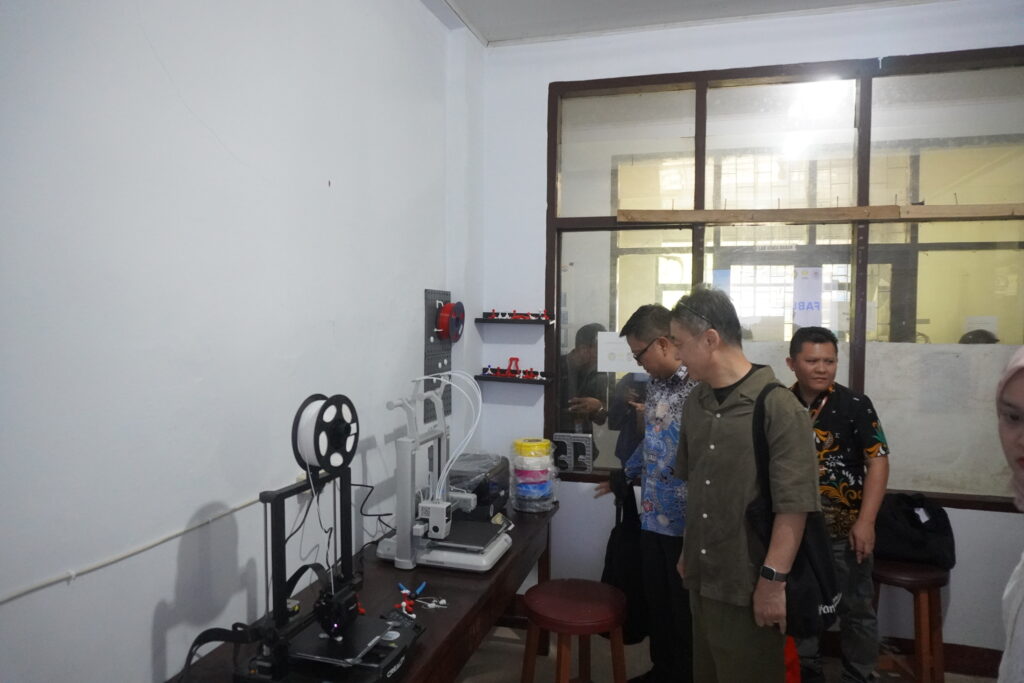
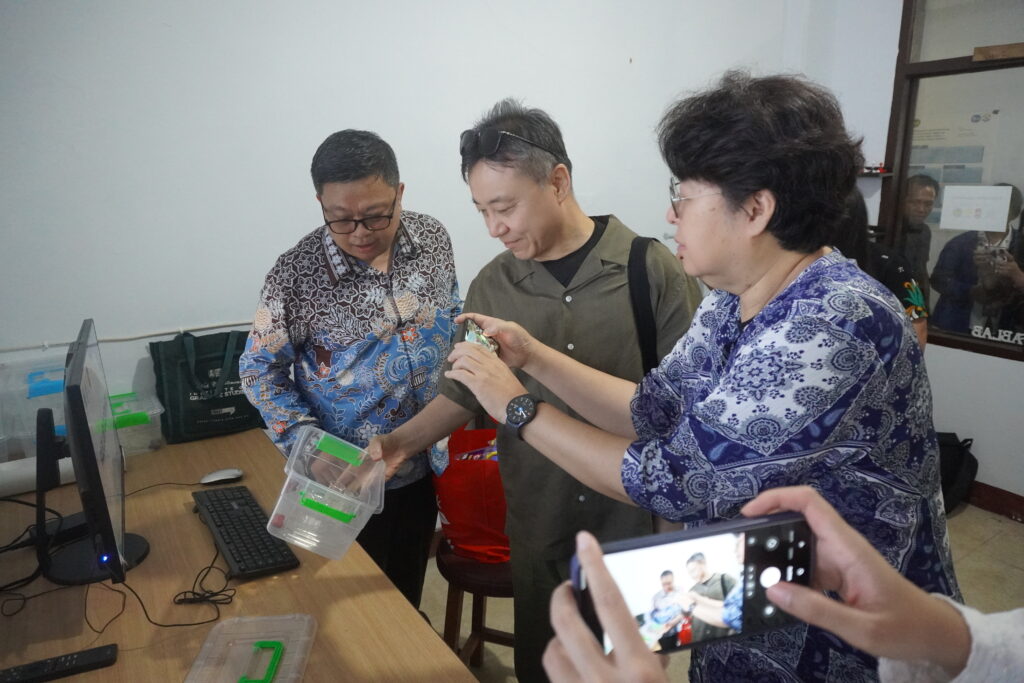
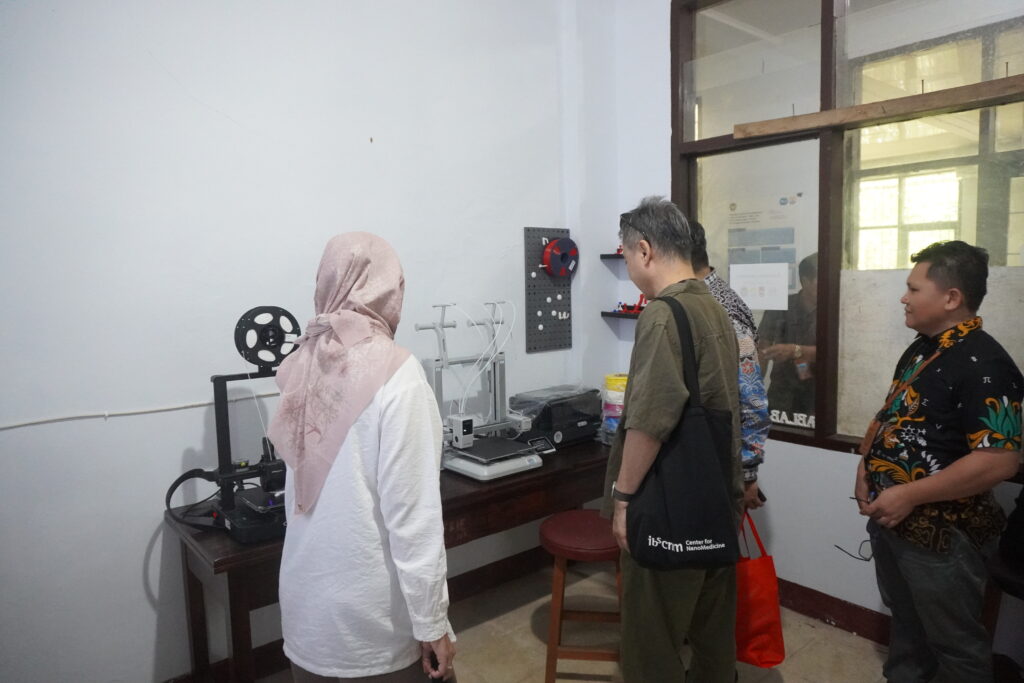
The Chemistry Fablab is designed as a creative and experimental space equipped with digital fabrication tools, enabling students and lecturers to develop instructional media, experimental devices, and technology‑based prototypes. The facility also supports microscale chemistry learning, EthnoSTEM approaches, and various educational innovations aligned with 21st‑century scientific competencies.
The inauguration marks a significant step forward for UNIMA in expanding its global academic network, enhancing research capacity, and providing a modern environment that encourages creativity, innovation, and collaboration within FMIPAK. The Fablab is expected to become a central hub for joint projects with partner universities, schools, and educational communities across North Sulawesi.