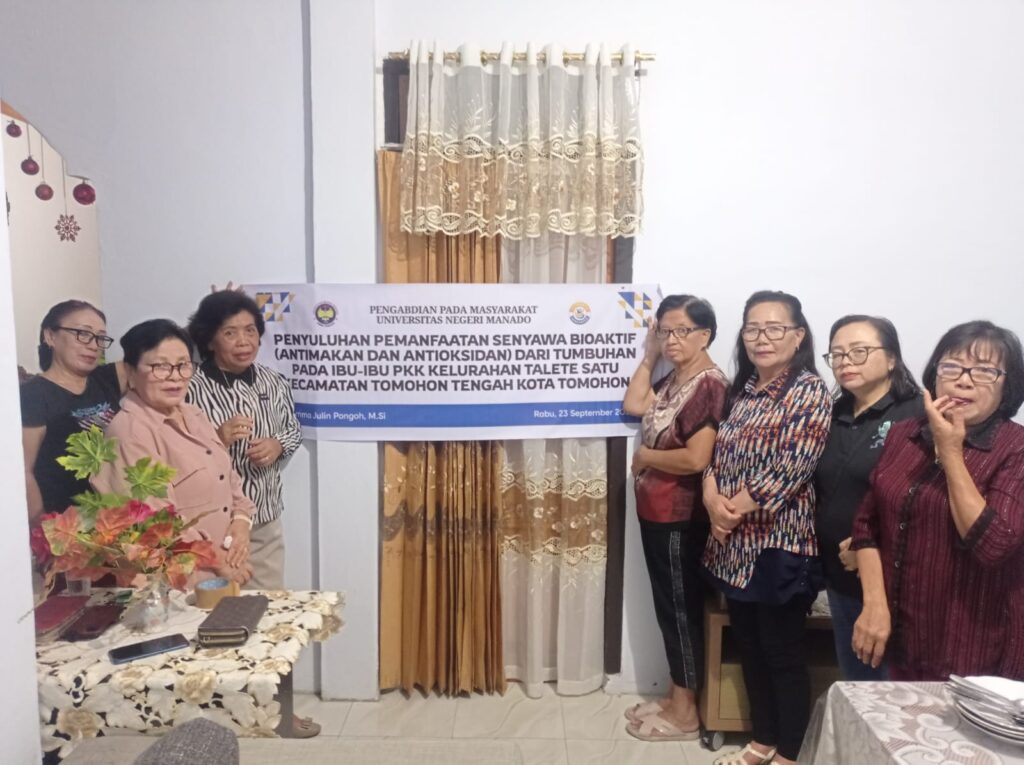
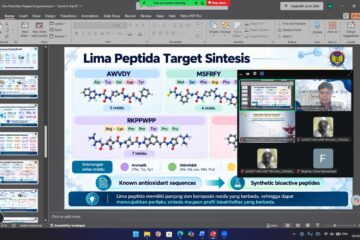
Tomohon, September 23, 2026 – As part of efforts to enhance community knowledge on the utilization of local biological resources, Dr. Emma Pongoh, M.Si., a lecturer from the Department of Chemistry, FMIPAK, Universitas Negeri Manado, conducted a community outreach program entitled “Utilization of Antifeedant and Antioxidant Bioactive Compounds from Plants” for members of the PKK organization in Talete Satu Village, Central Tomohon District, Tomohon City.
This activity was carried out as part of the implementation of the Tri Dharma of Higher Education, particularly in the area of community service, with the aim of disseminating scientific knowledge and research findings to the public for practical application in everyday life.
During the session, Dr. Emma Pongoh explained that many plants found in the local environment contain bioactive compounds with significant potential for sustainable utilization. Antifeedant compounds can serve as natural pest control agents in agriculture, while antioxidant compounds play an important role in neutralizing free radicals that may negatively affect human health.
Participants received information on plant species that are potential sources of bioactive compounds, methods for their utilization, and their benefits in both agriculture and family health. The presentation also emphasized the importance of using natural materials as environmentally friendly alternatives to excessive reliance on synthetic products.
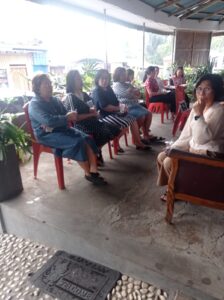
The activity was conducted interactively and received enthusiastic participation from the attendees. Various questions were raised regarding the use of local plants, the processing of natural materials, and opportunities for developing value-added products based on local biodiversity. The discussion reflected the growing awareness of the importance of utilizing local biological resources to support family well-being and environmental sustainability.
Through this program, it is expected that PKK members of Talete Satu Village will become agents of education within their communities, promoting the utilization of beneficial plant-based bioactive compounds. Furthermore, the activity is expected to encourage innovative, safe, and sustainable uses of local natural resources.